How to Choose the Right Thermal Interface Material
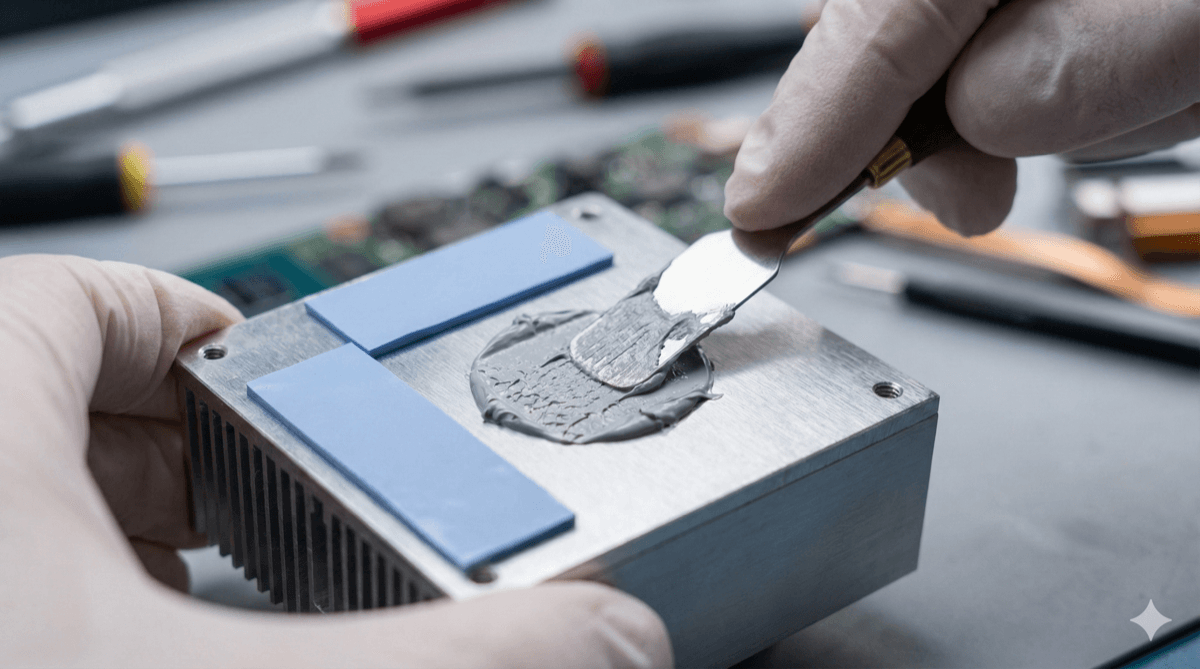
Thermal interface materials (TIMs) are critical yet often overlooked components in power electronics thermal management. The interface between a heat-generating component and its heatsink can account for 20-50% of the total thermal resistance in the system. Selecting the right TIM and applying it correctly can dramatically improve thermal performance and system reliability.
Why TIMs Matter
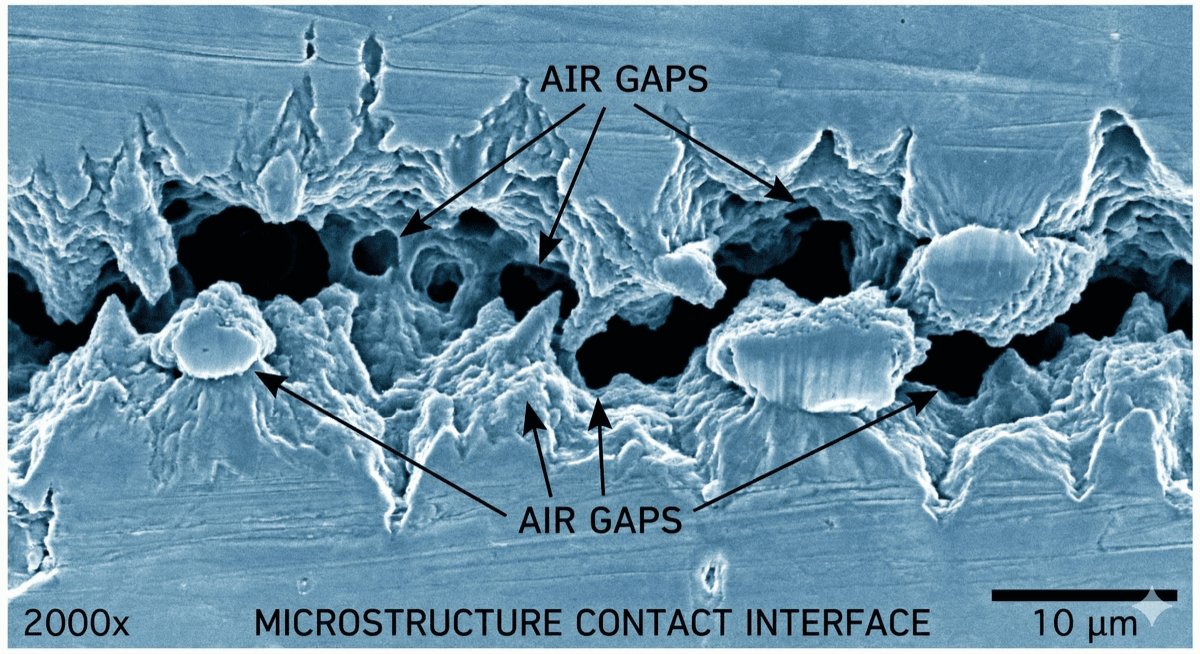
Even when a power device is mounted directly to a heatsink, microscopic surface imperfections prevent full contact between the two surfaces. Under a microscope, machined metal surfaces that appear smooth are actually covered with peaks and valleys. Without a TIM, actual metal-to-metal contact occurs over only 1-2% of the apparent contact area—the rest is filled with air, an extremely poor thermal conductor at just 0.026 W/mK.
This air gap creates a thermal bottleneck that can dominate overall thermal resistance. Consider a typical power module with:
- Junction-to-case thermal resistance: 0.1°C/W
- Case-to-heatsink resistance (without TIM): 0.3-0.5°C/W
- Heatsink-to-ambient resistance: 0.2°C/W
The interface resistance is actually the largest contributor! A properly selected TIM can reduce case-to-heatsink resistance to 0.05-0.15°C/W, cutting total thermal resistance by 20-30%.
Types of Thermal Interface Materials
TIMs come in several forms, each with distinct characteristics suited to different applications:
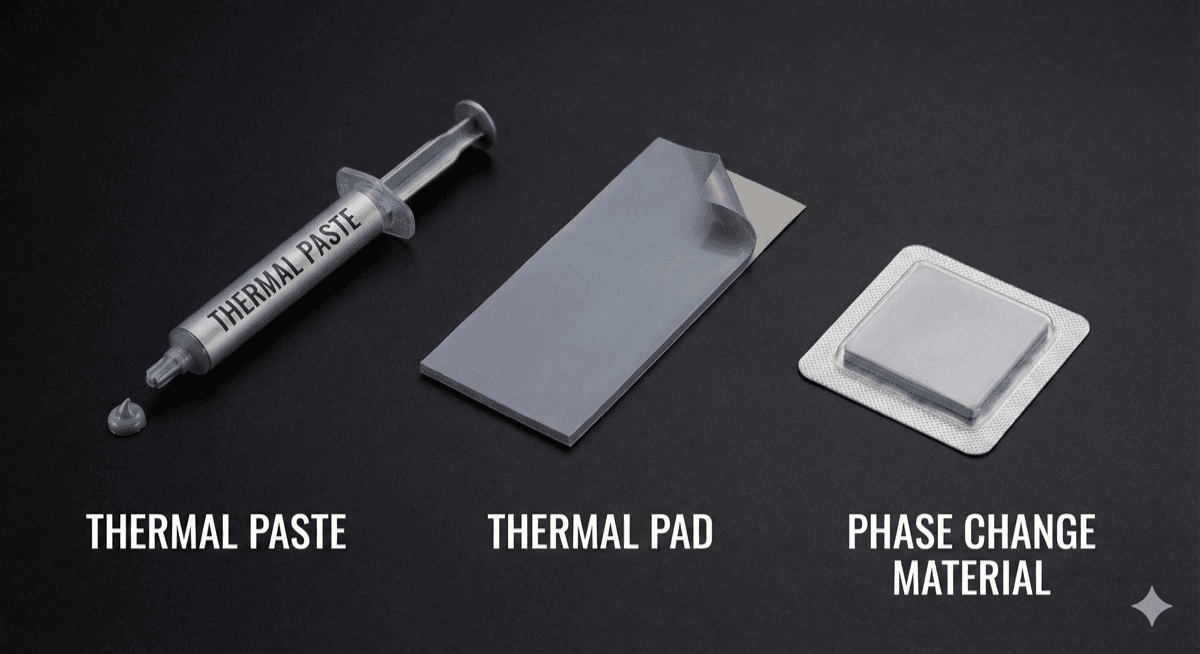
Thermal Greases and Pastes (1-5 W/mK typical) The original TIM solution, greases conform well to surface irregularities and achieve thin bond lines. They're inexpensive and effective but can be messy to apply and may pump out or dry out over time under thermal cycling. Best for applications where periodic reapplication is acceptable.
Thermal Pads (1-15 W/mK) Pre-formed pads offer consistent, production-friendly application. They're available in various thicknesses to accommodate different gap requirements and come in both electrically insulating and non-insulating versions. Higher-performance pads using ceramic or graphite fillers can achieve thermal conductivity approaching greases while maintaining the handling benefits of solid materials.
Phase-Change Materials (3-8 W/mK) These materials are solid at room temperature but soften at operating temperatures (typically 50-60°C) to flow and wet mating surfaces like a grease. They combine the performance of greases with the clean handling of pads. Excellent for high-reliability applications but more expensive.
Gap Fillers (1-6 W/mK) Thick, compliant materials designed to span larger gaps (1-5mm) between components and heatsinks or enclosures. Lower thermal conductivity than pads but essential when significant gap variation must be accommodated. Available in dispensable liquid or pre-formed sheet formats.
Key Selection Criteria
Choosing the optimal TIM requires balancing multiple factors:
Thermal Performance Thermal conductivity (W/mK) gets the most attention, but it's not the only factor. Bond line thickness and contact resistance at interfaces also matter. A 3 W/mK pad at 0.25mm thickness may outperform a 10 W/mK pad at 1mm thickness.
Gap Tolerance Understand the range of gaps your assembly must accommodate considering component tolerances, PCB warpage, and heatsink flatness. Select a TIM that remains effective across this range.
Operating Temperature Check that the TIM maintains performance across your application's temperature range. Some materials soften excessively at high temperatures or become brittle at low temperatures.
Electrical Properties Power electronics often require electrical isolation between devices and heatsinks. Verify the TIM's dielectric strength meets your isolation voltage requirements with appropriate safety margin.
Assembly Compatibility Consider how the TIM fits your manufacturing process. Greases require dispensing equipment and process controls. Pads can be pre-cut and placed manually or by pick-and-place equipment. Phase-change materials may require pre-conditioning.
Long-term Reliability For products with 10+ year lifetimes, evaluate TIM stability under thermal cycling, humidity exposure, and aging. Request reliability data from manufacturers or conduct accelerated life testing.
Application Best Practices
Proper TIM application is as important as material selection. Poor application technique can negate the benefits of premium materials.
Surface Preparation Clean mating surfaces thoroughly to remove oils, dust, and oxidation. Isopropyl alcohol is effective for most cleaning tasks. For critical applications, verify surface cleanliness before TIM application.
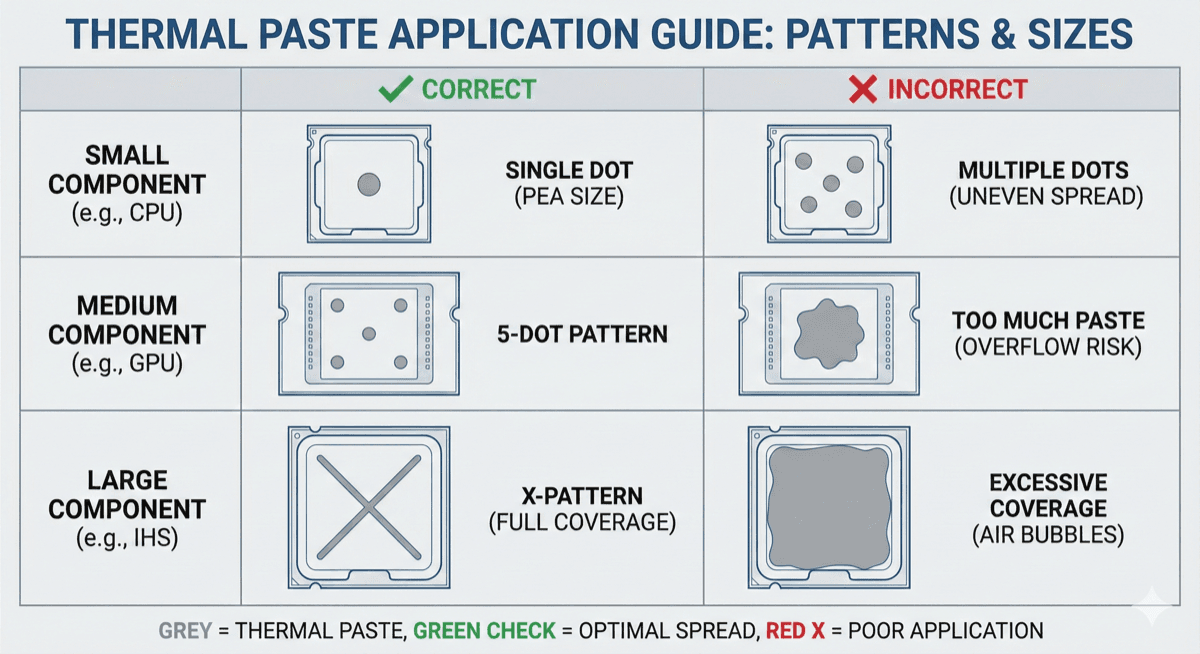
Grease Application Apply thermal grease in a thin, even layer—typically 50-100μm. More is not better; excess grease increases bond line thickness and thermal resistance. Screen printing or controlled dispensing produces more consistent results than manual spreading.
Pad Placement Remove release liners carefully to avoid stretching the pad. Position accurately on first placement—repositioning can introduce air bubbles. Apply uniform pressure during assembly to ensure full contact.
Assembly Pressure Most TIMs require some assembly pressure to achieve optimal performance. Follow manufacturer recommendations—typically 30-100 psi for pads. Insufficient pressure leaves voids; excessive pressure can damage components or squeeze out material.
Verify Results After assembly, measure actual thermal performance and compare to expectations. Thermal imaging can reveal poor TIM application before products ship.
Common Mistakes to Avoid
Through years of project experience, we've observed several recurring TIM-related mistakes:
Over-specifying thermal conductivity: Designers often request the highest thermal conductivity available without considering whether it's actually needed. A 15 W/mK pad costing $5 may perform only marginally better than a 5 W/mK pad costing $0.50.
Ignoring bond line thickness: Thermal resistance = thickness ÷ thermal conductivity. A material's effectiveness depends on both parameters, not just conductivity.
Inconsistent application: Manufacturing variation in TIM application can cause significant unit-to-unit thermal performance differences. Establish clear process controls and inspection criteria.
Neglecting compression set: Some pad materials permanently deform under pressure and lose effectiveness after thermal cycling. Specify materials with low compression set for applications involving repeated assembly/disassembly.
Forgetting electrical requirements: Accidentally specifying a thermally-enhanced but electrically conductive TIM where isolation is required can create serious safety hazards.
Cost vs Performance Trade-offs
TIM costs range from pennies per application for basic thermal greases to several dollars for high-performance pads or phase-change materials. The key is matching TIM performance to actual requirements.
For cost-sensitive consumer products with 3-5 year lifetimes, standard thermal pads or greases are usually adequate. Spend engineering effort on optimizing heatsink design rather than premium TIMs.
For industrial or automotive applications with 10-15 year reliability requirements, investing in higher-quality TIMs often makes sense. The incremental cost is small compared to warranty claims or field failures.
For space-constrained designs where thermal performance is critical, premium TIMs may enable smaller heatsinks that reduce overall system cost and size.
Always evaluate TIM selection in the context of the complete thermal solution rather than optimizing TIM performance in isolation.